










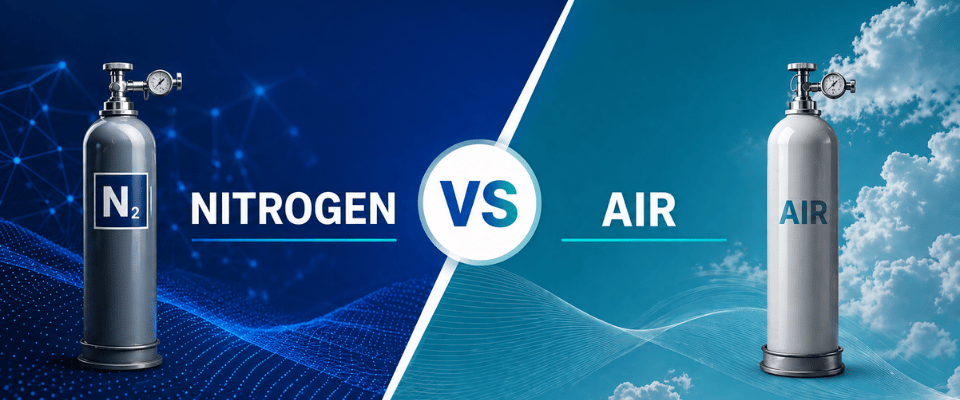

What is the Difference Between Compressing Nitrogen and Compressing Air?
Compressed nitrogen and compressed air both power critical industrial systems, but their different physical and chemical properties lead to important distinctions in compressor design, safety, and packaging.

How to Calculate Your Compressed Air Energy Costs
Energy usage accounts for up to 75% of a compressed air system’s total life-cycle cost, making it the single most significant expense for facilities operating industrial air compressors. While the initial purchase and ongoing maintenance matter, understanding your compressed air energy consumption is essential for identifying savings opportunities and optimizing system performance.

The Importance of Energy Efficiency
Many manufacturers know that compressed air is often called the Fourth Utility. After water, electricity, and natural gas, compressed air is equally crucial for manufacturing, and luckily there are solutions to help improve energy efficiency to save costs and reduce greenhouse emissions. Additionally, increased efficiency is essential for ESG initiatives that ensure a healthy world for customers, employees, and communities.