





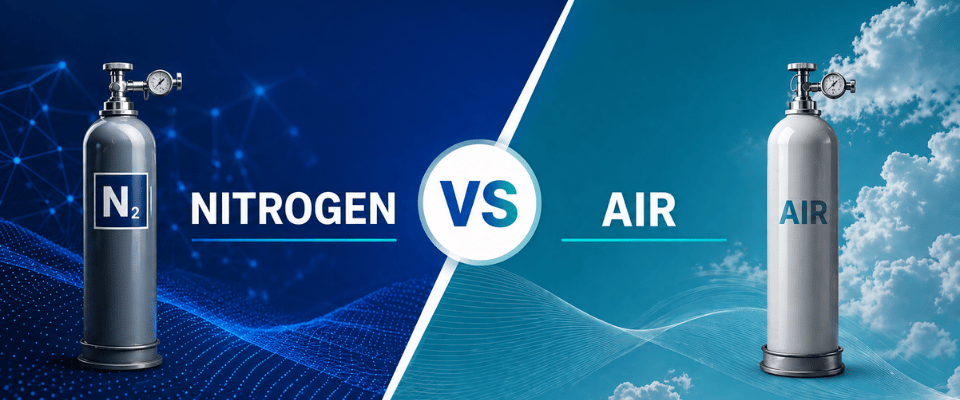
질소를 압축하는 것과 공기를 압축하는 것의 차이점은 무엇입니까?
10월 22, 2025
압축 질소와 압축 공기는 모두 중요한 산업 시스템을 구동하지만, 그들의 서로 다른 물리적 및 화학적 특성은 압축기 설계, 안전성 및 포장 방식에 있어 중요한 차이를 초래합니다.
Fundamental Differences Between Nitrogen and Air
- Nitrogen is a pure gas.
- Air comprises nitrogen, oxygen, argon, and trace gases.
- Inert Behavior: Because nitrogen is inert, it does not react like oxygen. Compressing it demands equipment built to resist contamination, moisture, and degradation over time.
- While many compression principles overlap, equipment selection, safety measures, and system packaging must adapt to each gas’s unique traits.
- Compressing nitrogen is simpler than compressing air since there are no other gases to consider.
| 기능 | Compressed Air | Compressed Nitrogen |
|---|---|---|
| Composition | Mix of nitrogen (78%), oxygen (21%), argon, and trace gases. | 100% pure inert nitrogen gas. |
| Reactivity | Reactive; oxygen presence introduces risks of oxidation, moisture, and combustion. | Inert (non-reactive); prevents oxidation and spoilage. |
| Compressor Design | Standard industrial design; handles standard pressures and moisture removal. | Requires robust design, higher pressure thresholds, and specific seals to prevent contamination. |
| Primary Safety Risk | Standard high-pressure mechanical risks. | Asphyxiation risk; displaces oxygen without odor or warning. |
Common Industrial Uses for Compressed Nitrogen Gas
Compressed nitrogen gas serves critical roles across manufacturing industries that demand high purity, controlled environments, or an inert atmosphere. Common applications for a nitrogen compressor include:
- Electronics: Nitrogen is used to manufacture electronic components (semiconductors, LCDs, and computer chips) to create a controlled environment free of oxygen and other impurities. Those gases can significantly damage electronic components’ capabilities. This is a rapidly expanding industry requiring increasing demand for pressurized nitrogen.
- Chemical: Nitrogen is also required for many processes, including the production of ammonia and fertilizers. Nitrogen is used to neutralize the potentially harmful effects of oxygen in chemical manufacturing operations through nitrogen blanketing. Nitrogen blanketing introduces nitrogen gas into a storage vessel that will be used to store chemical components or finished chemical products.
- Welding: Nitrogen acts as shielding to help improve the welding quality. It protects the weld from surrounding air, which contains moisture and other impurities that can negatively impact weld strength and quality.
- Food & Beverage: Nitrogen helps with packaging and preservation. Since nitrogen is an inert gas, it prevents oxidation and spoilage for food products such as potato chips, nuts, fruits, and dairy.
- Medical: Nitrogen is used in many intricate surgeries and therapy practices to freeze and destroy abnormal tissue growth. It is also used in medical imaging, like MRIs, to cool the equipment.
For many manufacturing applications, nitrogen is safer as part of the process because it is non-flammable and non-reactive.
Safety Considerations for Nitrogen Compressors
- Clear Warning Labels/Instructions: Units will typically be manufactured with additional warning labels that warn of the possibility of nitrogen asphyxiation, particularly for confined spaces.
- Solenoid Valves: Additional solenoid valves may be used in the seal gas piping to prevent the flow of nitrogen seal gas to the compressor’s seals when the units are not in operation. This will prevent excess nitrogen leakage through buffered seals to the surrounding area and prevent nitrogen from being wasted.
These safety provisions are necessary because nitrogen’s invisibility and lack of odor can mask danger until it’s too late.
Packaging And Design for Nitrogen Compressors
There are a few essential considerations when packaging nitrogen compressors compared to standard air compressors.
- Recycle Valve: While the design and operation can vary, recycling valves return nitrogen to the process instead of blowing the excess off into atmospheric air. This ensures the customer is not wasting any excess gas and saving money.
- Pressure Considerations: Nitrogen compressors must withstand higher pressure than normal air compressors. Nitrogen processes will typically have higher nitrogen inlet and discharge pressure resulting in compressor casings and coolers having higher MAWPs (Maximum Allowable Working Pressure).
- Combination Machines: Packaging dual process machines that compress air and nitrogen not only help support two different processes but can cut capital and operation costs by having one machine instead of two separate machines for their process. It makes the installation and operation simple for end users in the long run.
Overall, nitrogen compression demands more robust hardware, precise control, and safety features tailored to its properties.
Which Compressor System is Better?
The main difference between nitrogen and air is the gas properties and the specific applications of these compressors. Nitrogen compressors can handle higher pressures, remove contaminants from gas, and work safely with the unique properties of nitrogen gas.
For additional information on nitrogen compressor and air separation applications download our informational brochure.
Optimize Your Nitrogen and Air Compression Systems
Connect with our team to explore how FS-Elliott’s centrifugal compressor solutions can help meet your specific air and nitrogen compression requirements while improving energy efficiency, system performance, and long-term reliability.
또한 여러분도 좋아하실 수 있습니다.
계속 읽기

FS-Elliott, Polaris® P300 AC를 소개하여 냉각수 없이 오일 프리 원심 성능 제공
FS-Elliott은 900–2,220 cfm의 ISO 8573-1 Class 0 오일 프리 공기를 제공하는 공냉식 원심 압축기인 Polaris® P300 AC를 소개합니다. 이 제품의 설계는 제조업체가 냉각수 연결부를 추가하지 않고도 새로운 압축기를 설치하거나 용량을 확장할 수 있는 유연성을 제공합니다.

분리형 공기 압축기의 수명 최적화 — 에피소드 5: 컴프레서 자체만큼 운전원 트레인의 상태도 중요합니다
5화에서는 모터, 기어박스, 커플링, 그리고 보조 시스템이 왜 특별한 주의를 받아야 하는지, 그리고 운전원 구동부의 상태가 압축기 안정성에 어떤 영향을 미치는지를 살펴보겠습니다.

집진식 공기 압축기의 수명 최적화 — 에피소드 4: 계측 및 모니터링의 발전
4화에서는 압축기 모니터링, AI 및 엔지니어링의 발전이 상태 기반 유지보수를 지원하고 노후된 장비를 현대화하는 방식을 살펴보세요.