
In industrial applications, air filtration isn’t just about protecting the compressor; it’s about protecting your entire operation. A well-specified air filter safeguards equipment, preserves airflow quality, and helps maintain consistent pressure and performance. Whether you're operating in a dusty mill environment or a cleanroom, the right filtration system can dramatically reduce downtime, energy loss, and maintenance intervals.
Compressed Air Contamination: An Overlooked Performance Risk
Every cubic foot of atmospheric air pulled into your compressor can contain millions of contaminants, including water vapor, oil mist, particulates, and microdebris. Once compressed, these contaminants become more concentrated and more damaging.
For systems running oil-lubricated rotary screw or reciprocating compressors, oil aerosols become an additional concern. Even
centrifugal air compressors, which produce oil-free air, are susceptible to environmental debris without proper inlet filtration.
Since one cubic foot of compressed air contains millions of dirt particles, removing this contamination through a high-quality air filter will avoid damage to your compressor and keep valves from swelling. Otherwise, this will inevitably lead to increased vibration and a reduction in service life.
Key impacts of poor filtration:
- Increased impeller wear and vibration
- Reduced flow capacity and turndown
- Valve degradation and control instability
- Premature component failure and downtime
Understanding Air Filter Terminology
Below are the standard terms you will find when reviewing and comparing air filter elements.
- Particle Size Efficiency (PSE) – This measures the specific micron sizes in diameter and determines the air filter's ability to remove particles.
- Filter Micron Size – A micron is a unit of measurement equal to one-millionth of a meter. A filter's micron rating determines the specific size of the particles it can capture. For context, particulates visible to the human eye are at least 5 microns large, meaning industrial filters must capture microscopic debris to be effective.
- Arrestance – The percentage of debris or dust, by weight, that a filter element can stop.
- USA MERV (Minimum Efficiency Reporting Value) – This rating indicates how efficient a filter is at removing particulates and preventing them from entering the air stream. The higher the MERV rating, the more effective the filter is at trapping smaller particulates. However, it comes at the cost of creating more resistance to airflow, thus reducing system efficiency. The lower the MERV rating, the less effective the filter is at removing smaller particulates, but there is also less disruption in the airflow with these lower-rated filters.
- European Efficiency Class EN1822:2019, EN779:2012 & EN779:2002 – Similar to MERV, this rating was created for consistent air filter testing. The factory test ensures the air filter achieves the specified efficiency of removing debris.
Air Filter Sizes and Micron Rating Chart
Use the air filter size chart below to compare common European (EN779) filter classes with their corresponding USA MERV ratings and their efficiency at capturing specific micron sizes.
| EN779 Filter Class |
USA MERV Rating |
Particle Size Efficiency (PSE) |
Primary Capture Target |
| G2 |
MERV 1-4 |
< 20% of 10.0 μm |
Very large dust, pollen, debris |
| G4 |
MERV 7-8 |
> 90% of 10.0 μm |
Standard industrial dust and particulates |
| F5 (M5) |
MERV 9-10 |
50-65% of 3.0 μm |
Fine dust, larger oil aerosols |
| F7 |
MERV 13 |
80-90% of 1.05 μm |
Very fine dust, smoke, sub-micron contaminants |
What to Consider When Specifying an Air Compressor Filter
For most compressed air systems, there is a primary or pre-filter element and a secondary or final filter element. The primary filter is the first line of defense against debris and is typically replaced more often to ensure the highest level of contamination is removed. The secondary filter serves as the second defense catching the smaller particles that made it through the primary filter.
Experienced engineers know that filter choice affects far more than air purity. The wrong media or rating can lead to:
- Unnecessary pressure drop (increased energy consumption)
- Frequent filter changeouts (higher O&M costs)
- Inadequate moisture/contaminant removal (system degradation)
Factors to evaluate:
- Micron rating vs. system sensitivity – Avoid under- or overspecifying filtration.
- Pressure drop tolerance – High MERV ratings increase resistance; balance air quality with efficiency.
- Material compatibility – Filter media should match your application environment (e.g., high humidity, chemical exposure).
- Serviceability – Filters that are easy to access and replace reduce labor and improve uptime.
High-Dust vs. Cleanroom Environments
Application environment should directly influence filter strategy:
- High-dust facilities (e.g., pulp, textile, cement):
- Require high-efficiency particulate filters
- May benefit from pre-filtration or staged systems
- Changeout frequency is higher; use extended-life media where possible
- Low-dust environments (e.g., controlled manufacturing):
- Can operate with standard filtration and longer maintenance intervals
- Emphasis shifts to pressure stability and low pressure drop
FS-Elliott Air Filter Solutions
To improve both operational uptime and maintenance efficiency, FS-Elliott offers Change on the Go air filters, allowing technicians to replace filters without shutting down the compressor. This innovation enables:
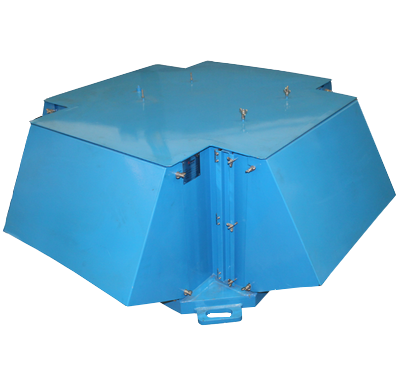
- Zero disruption during changeout
- Faster maintenance cycles
- Reduced system depressurization risks
These filters are available in standard and extended-life variants to support varied production schedules and airborne particulate levels.
Filter Lifecycle Strategy: Balancing Performance & Cost
While high-efficiency filters can increase upfront cost and pressure drop, they may extend component life and reduce unplanned maintenance. A driven approach should consider:
- Filter lifespan (hours or flow rate)
- Downtime risk and cost of failure
- Energy penalty from pressure drop
- Cost of component repair vs. filter replacement
OEM maintenance intervals should always be followed to preserve airend performance and warranty coverage.
Selecting the Right Filter for Your Operation
Rather than relying on generic recommendations, your filtration strategy should align with:
- Ambient air conditions
- Compressor type and sensitivity
- System pressure requirements
- Industry regulations (e.g., ISO 8573, FDA/food grade)
Air filters may be small, but their impact on system longevity, reliability, and efficiency is significant. By investing in high-quality filtration that matches your operating environment and system configuration, you reduce downstream maintenance issues, extend equipment life, and improve plant uptime.
When evaluating overall system efficiency, engineers may also use
tools to analyze system performance scenarios and identify opportunities for optimization beyond filtration.
Need Help Choosing the Right Filter?
Please contact your local
FS-Elliott authorized channel partner for assistance with selecting the right air compressor for you.