
Compressed air is often called the fourth utility, but in many manufacturing environments, it also plays a direct role in product quality, operational efficiency, and regulatory compliance. That makes air quality more important than many facilities realize.
Oil-free
centrifugal compressors still use lubricant for bearings and mechanical systems, but the lubrication system is isolated from the compressed air path to help prevent oil from entering the compressed air stream.
That is why more manufacturers are evaluating the long-term benefits of oil-free compressed air systems, particularly ISO 8573-1 Class 0 certified centrifugal compressors. Beyond eliminating oil contamination risk, oil-free systems can also reduce maintenance, improve reliability, and lower lifecycle costs.
Why Oil in Compressed Air Can Be a Hidden Risk
In oil-lubricated compressor technologies, oil is introduced during the compression process and must later be removed through downstream filtration and separation systems. While effective filtration can help, this approach still creates additional maintenance points and introduces risk if components are not monitored or replaced on schedule.
Even trace oil carryover can create problems depending on the application, including:
- Product contamination
- Damaged pneumatic equipment or controls
- Increased filter loading and pressure drop
- Condensate disposal complications
- Unplanned downtime from maintenance issues
- Greater compliance concerns in sensitive industries
What ISO 8573-1 Really Means for Compressed Air Quality
When discussing oil-free compressed air, it is important to understand how air purity is actually measured. That is where ISO 8573-1 comes in.
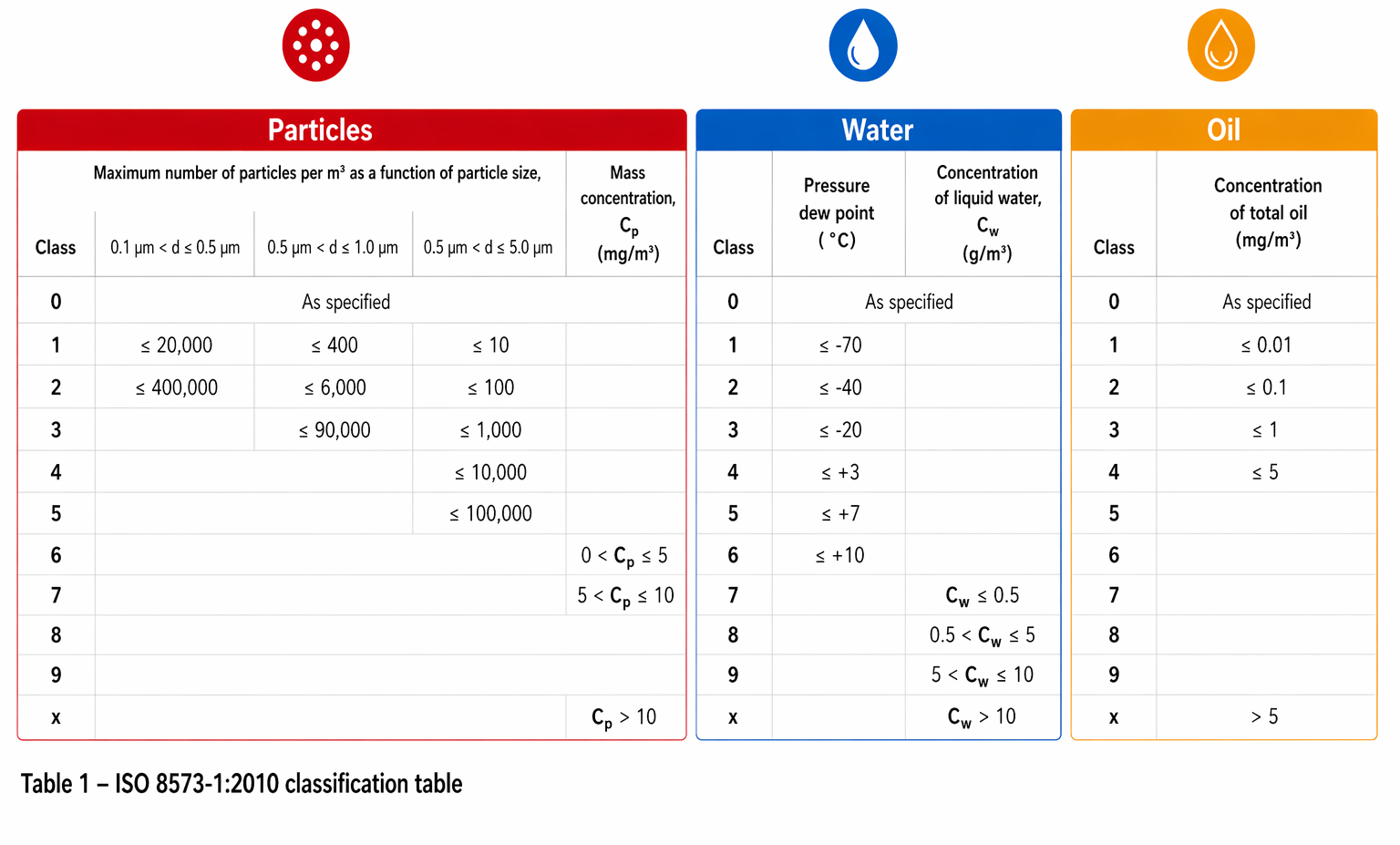
ISO 8573-1 is the internationally recognized standard used to classify compressed air quality based on three common contaminants:
- Particles (dust, debris, rust, pipe scale)
- Water (humidity, vapor, liquid moisture)
- Oil (liquid oil, aerosols, vapors)
Each of these contaminants can create risk if not properly controlled. In manufacturing environments, contamination may disrupt sensitive processes, reduce system efficiency, and create operational inconsistency. In food and beverage applications, the stakes can be even higher, potentially impacting taste, sanitation, shelf life, or leading to costly recalls. Moisture and residue can also create breeding grounds for microorganisms, bacteria, and mold.
ISO 8573-1 uses a three-part classification format based on the three common contaminants listed above, with lower class numbers representing higher compressed air purity, as shown in Table 1.
What Does Class 0 Mean and Why It Matters
Class 0 is often misunderstood. It does not mean zero contaminants in an absolute sense across all three categories of particles, water, and oil. Instead, ISO defines Class 0 as air quality more stringent than Class 1, based on limits specified by the equipment supplier or end user.
For oil-free centrifugal compressor technology, no oil is introduced into the compression chamber or compressed air stream during the compression process. This means the compressor itself does not add oil contamination to the air, helping support the highest available air purity classification for oil content when the system is properly designed, maintained, and applied.
Many oil-lubricated compressor technologies, such as rotary screw and reciprocating compressors, introduce oil during compression and then rely on downstream filtration to remove it afterward. Oil-free centrifugal compressors take a preventative approach by keeping oil out of the compressed air stream from the start.
Because oil-free centrifugal compressors use no oil in the compression process, facilities can reduce oil contamination risk, simplify air treatment strategies, and support applications where clean air is critical. Understanding ISO 8573-1 also helps manufacturers compare systems more accurately and select air quality levels based on real operating needs rather than marketing claims alone.
Lower Maintenance and Fewer Consumables
Oil-free systems can also reduce ongoing maintenance requirements.
Oil-lubricated systems may require multiple oil filters, separators, oil changes, condensate treatment equipment, and regular monitoring to maintain air quality and performance. By comparison, oil-free centrifugal compressors eliminate many of those components.
That can translate into:
- Fewer consumables to replace
- Lower service labor requirements
- Reduced pressure loss from loaded filters
- Less maintenance-related downtime
- Cleaner downstream equipment and dryers
Improved Reliability for Continuous Production
Reliability matters when compressed air supports production-critical operations.
Oil-free centrifugal compressors use fewer wear-contact compression surfaces than many positive displacement technologies, helping reduce rebuild frequency and long-term service interruptions. Many facilities choose centrifugal technology for continuous-duty applications where uptime is essential.
Which Industries Benefit Most?
Oil-free compressed air can create value in nearly any manufacturing environment, but it is especially beneficial when air quality impacts products, people, or production continuity. Common examples include:
- Food and beverage – Helps reduce contamination risk in products and packaging.
- Plastics molding – Supports cleaner operations and consistent part quality.
- Electronics and semiconductor manufacturing – Provides clean, dry air for sensitive processes.
- Pharmaceuticals – Helps protect product integrity and sanitation standards.
- Packaging – Supports clean filling, sealing, and conveying operations.
- Textile manufacturing – Helps prevent staining and fiber contamination.
- Automotive operations – Benefits paint systems, automation, and air tools.
In each of these industries, cleaner compressed air can help reduce risk, improve product quality, support uptime, and lower the hidden costs associated with contamination.
Final Thoughts
Oil-free compressed air is not just about cleaner air. It is about reducing risk, lowering operating costs, simplifying maintenance, and improving long-term plant performance.
For facilities focused on reliability, efficiency, and product quality, an oil-free centrifugal compressor may be one of the smartest upgrades available.
Contact us to discuss your compressed air system and learn how ISO 8573-1 Class 0 oil-free centrifugal technology can help reduce contamination risk, improve reliability, and support long-term operational performance.
Frequently Asked Questions (FAQs)
What does oil-free compressed air mean?
Oil-free compressed air refers to air produced without oil contamination entering the compressed air stream during operation. Oil-free centrifugal compressors still use lubricant for bearings and mechanical systems, but that lubricant is isolated from the air path.
Why is oil-free air important?
Oil-free air helps reduce contamination risk, especially in industries where compressed air may contact products, packaging, tools, or sensitive equipment.
Is oil-free compressed air more efficient?
Many oil-free centrifugal compressors are highly efficient, especially in larger continuous-demand applications.
Does oil-free mean maintenance-free?
No. All compressors require maintenance. However, oil-free systems can reduce certain maintenance items such as downstream oil filtration, separator changes, and condensate treatment.
Which industries should consider oil-free compressors?
Food and beverage, plastics, electronics, pharmaceuticals, packaging, and any plant focused on reliability or clean air quality should evaluate oil-free options.
How can I know if oil-free is right for my facility?
A full compressed air system review that considers flow demand, pressure, energy costs, maintenance history, and air quality requirements is the best place to start.